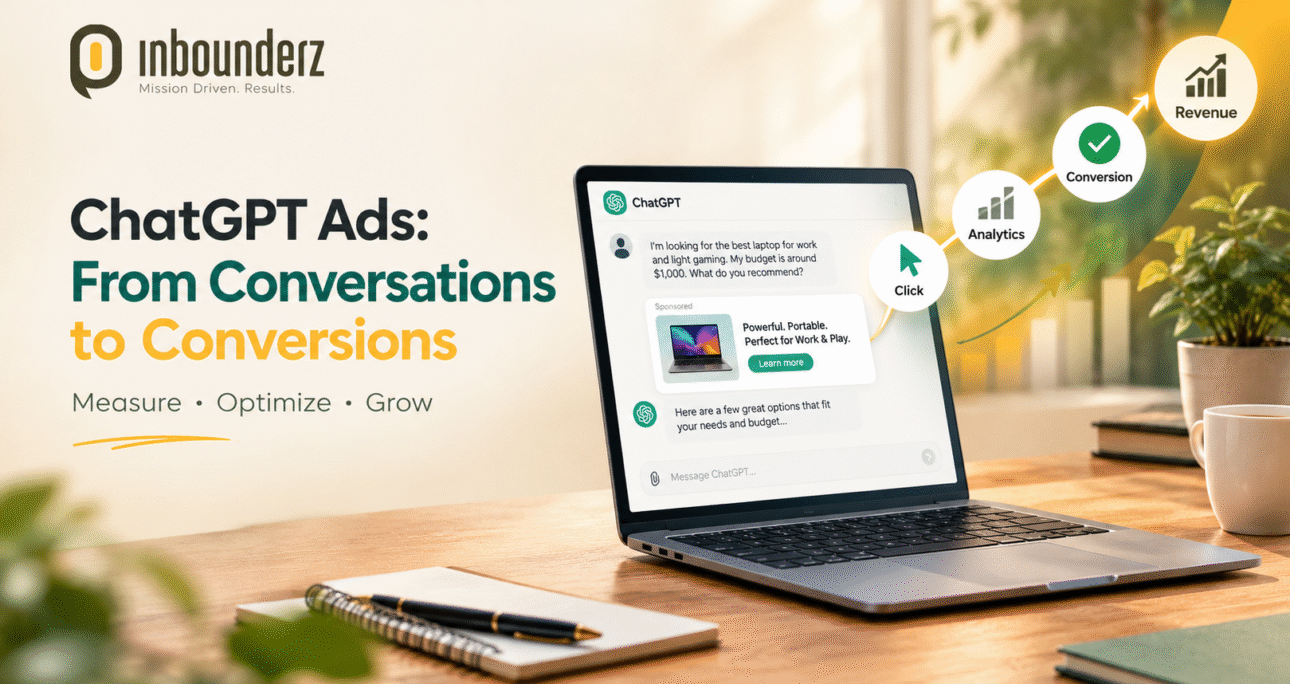
Running an ad on ChatGPT is one thing. Knowing whether it actually worked is a different challenge altogether. Since OpenAI began testing ads inside ChatGPT in January 2026, marketers have been asking the same question in almost every meeting: someone saw our ad inside a conversation, but how do we know if that conversation turned into a real customer?
This is the measurement gap at the center of ChatGPT advertising right now. Unlike a Google search ad, where a click follows a clear, linear path, a ChatGPT ad often sits inside a longer, back-and-forth conversation.
A user might see a sponsored placement while researching software on a Tuesday, keep chatting with ChatGPT through the week, and finally make a purchase from a different device on a Friday. Traditional last-click tracking misses most of that journey.
The good news is that measurement tools for this channel have matured fast.
This blog breaks down exactly how businesses can track ChatGPT ad performance, which metrics actually matter, and how to optimize campaigns so that conversations turn into real, countable conversions.
What Makes Measuring ChatGPT Ads Different From Other Channels
Before looking at specific metrics, it helps to understand why ChatGPT advertising does not behave like search or social advertising.
The intent signal is a full sentence, not a keyword
A user does not type “running shoes.” They type a full question describing their budget, use case, and preferences. This context matters for measurement, since a click carries more qualified intent than a typical search click.
Ads sit inside a conversation, not a results page
A user might see an ad, keep chatting, ask follow-up questions, and return to the ad days later. This breaks the simple, one-step click-to-conversion path marketers are used to.
Privacy limits how much data advertisers can see
OpenAI does not share individual conversations, user identities, or demographic details with advertisers. Reporting stays aggregated, showing totals for views, clicks, and conversions rather than a breakdown of who said what.
Click-through rate behaves differently here
Early data shows ChatGPT ad click-through rates tend to run lower than traditional search ads, but the users who do click often convert at a higher rate. This means a lower click-through rate does not automatically mean a weaker campaign.
Businesses that walk into ChatGPT advertising expecting Google Ads-style reporting will likely feel confused. The smarter approach is to build a measurement plan around how this channel actually works.
What Metrics Actually Matter for ChatGPT Advertising
Core Metrics Available Inside ChatGPT Ads Manager
OpenAI’s advertising platform, often referred to as ChatGPT Ads Manager, reports a core set of performance metrics that businesses should track from day one:
- Impressions: How many times an ad was shown.
- Clicks: How many times a user clicked through to the advertiser’s site.
- Click-through rate (CTR): The percentage of impressions that resulted in a click.
- Cost per click (CPC) and cost per thousand impressions (CPM): The core cost metrics used to evaluate spend efficiency.
- Conversions: Purchases, sign-ups, leads, or other actions, once conversion tracking is properly set up.
- Return on ad spend (ROAS): Calculated from attributed orders, when ecommerce tracking is connected correctly.
These numbers give a useful baseline, but on their own, they do not tell the full story of how a ChatGPT ad influenced a buyer’s decision.
Why Conversion Tracking Setup Matters So Much
OpenAI’s platform updates through 2026 introduced a tracking pixel for site-side events and a Conversions API for server-side measurement of purchases, sign-ups, and leads. This means businesses can now connect what happens on their own website back to a specific ChatGPT ad campaign, rather than relying only on platform-reported clicks.
Setting this up correctly is not optional. Without a properly configured pixel or Conversions API integration, a business is only seeing half the picture, clicks and spend, with no clear view of what those clicks actually produced.
Metrics Businesses Cannot Get From the Platform Alone
It is just as important to understand what ChatGPT Ads Manager does not show. As of now, advertisers do not get:
- Demographic breakdowns of who engaged with an ad
- Reach and frequency data
- Log-level, conversation-by-conversation export
- Independent, third-party verification of reported numbers
This gap is exactly why businesses need to combine platform-reported metrics with their own first-party analytics, rather than treating OpenAI’s dashboard as the single source of truth.
How to Build a Reliable ChatGPT Ads Measurement Framework
Use Clean UTMs on Every Landing Page
Every ChatGPT ad campaign should point to a landing page with clear, consistent UTM parameters. This allows a business’s own analytics platform, such as Google Analytics or a CRM, to identify traffic coming specifically from ChatGPT ads, separate from organic search or social traffic.
Connect the Pixel and Conversions API Early
Businesses should set up the ChatGPT ads pixel and Conversions API integration before launching a campaign, not after. This ensures conversion data starts flowing from day one, instead of losing weeks of attribution data while tracking catches up.
Look Beyond Last-Click Attribution
Because ChatGPT conversations often unfold over several days, a strict last-click attribution model will undercount this channel’s real impact. Businesses should review assisted conversions and consider a blended attribution view that credits ChatGPT ads for their role earlier in the buyer’s journey, not just the final click before purchase.
Blend Platform Data with Business Reporting
The most accurate picture comes from combining OpenAI’s platform metrics with a business’s own sales and revenue data. If ChatGPT ad spend is rising but actual qualified leads or sales are not, that mismatch shows up faster in blended reporting than in platform metrics alone.
Segment Performance by Query Type
Since ads trigger mainly on commercial-intent queries, businesses should track which types of questions are driving the strongest results. A campaign performing well on comparison-style queries, like “best options for,” may need a different creative approach than one targeting direct purchase-intent queries.
How to Optimize ChatGPT Ad Campaigns Once Data Starts Coming In
Test Conversion-Optimized Bidding
Conversion-optimized cost per click, often called oCPC, allows a campaign to optimize delivery toward a specific conversion goal while billing remains based on valid clicks. Businesses running lead generation or e-commerce campaigns should test this bidding approach once enough conversion data has been collected to guide it.
Refine Ad Copy Based on Conversation Context
Since ChatGPT ads appear inside a conversational flow, copy that sounds like a natural, helpful answer tends to outperform copy that reads like a traditional advertisement. Businesses should review which ad variations get clicked most often and refine language to match the tone of a genuine, useful response.
Improve the Landing Page Experience
A high click-through rate means little if the landing page does not deliver on what the ad promised. Businesses should make sure landing pages load quickly, match the ad’s messaging closely, and make the next step, whether that is a purchase, a sign-up, or a demo request, obvious and simple.
Reallocate Budget Toward High-Converting Query Types
Once a business has enough data segmented by query type, it should shift budget toward the commercial-intent questions producing the strongest conversion rates, rather than spreading spend evenly across every possible trigger.
Review Performance on a Regular Cycle
Businesses should look at how well their ChatGPT ads are doing more often than they might with an established channel like Google Ads because this is still a growing advertising platform. Reviewing once a week or twice a week can help you notice changes in cost per click, conversion rate, or query trends early on, before they have a big effect on your budget.
Common Measurement Mistakes Businesses Should Avoid
Relying only on platform-reported numbers: Combine ChatGPT Ads Manager data with first-party analytics for an accurate picture.
Skipping pixel and Conversions API setup: Without it, conversion data stays incomplete from the start.
Judging performance by click-through rate alone: A lower CTR paired with a higher conversion rate can still mean a stronger campaign.
Ignoring the multi-session buyer journey: Last-click attribution alone will undercount this channel’s true contribution.
Comparing ChatGPT ads directly to mature channels too early: This is still a new advertising surface, and benchmarks are still developing across industries.
Turning Measurement Into Real Growth
ChatGPT advertising is no longer just an experiment. With pixel tracking, a Conversions API, and conversion-optimized bidding now available, businesses finally have the tools to connect AI conversations to actual business outcomes. The businesses that treat measurement as seriously as the ad creative itself will be the ones who scale this channel with confidence, while others are still guessing.
Let Inbounderz Help You Measure What Matters
Getting a ChatGPT ads campaign live is only half the job. Knowing exactly which conversations turn into leads and sales is what makes the investment worth it.
If your business wants a measurement and optimization plan built specifically around ChatGPT advertising, the team at Inbounderz can help you set up the right tracking, read the right metrics, and turn AI search traffic into real, trackable growth. Reach out to Inbounderz to get started.
Frequently Asked Questions
Yes. Businesses can track conversions through the ChatGPT ads pixel for site-side event tracking and the Conversions API for server-side measurement of purchases, sign-ups, and leads. Both need to be set up correctly before conversion data becomes reliable.
ChatGPT ads appear inside a conversational answer rather than a traditional results page, so users engage with them differently. Early data suggests that while click-through rate runs lower than typical search benchmarks, the users who do click often show stronger purchase intent, which can lead to higher conversion rates from a smaller volume of clicks.
The biggest challenge is what many marketers call the conversation gap, the disconnect between where a user engages with a brand, inside a chat thread, and where they eventually convert, usually on a separate website visit. This gap makes simple last-click attribution unreliable for this channel.
No. OpenAI keeps ChatGPT ads reporting aggregated data and does not share individual conversations, user identities, or demographic profiles with advertisers. Businesses see totals for impressions, clicks, and conversions rather than a breakdown of specific users.
Since ChatGPT advertising is still a maturing channel, businesses should review performance weekly or biweekly rather than monthly. Frequent reviews help catch shifts in cost per click, conversion rate, or query trends early enough to adjust budget and creative before they affect results significantly.